Trupti Reddy, Tender’s Director of Impact and Policy, explains why the government’s ‘curriculum overhaul’ must prioritise RSHE in order to make young people feel safe and engaged at school.
Last week, the Government announced an overhaul of the national curriculum to re-engage pupils in vital early secondary years.
The announcement made no mention of RSHE, even though new RSHE guidance came into force on 1st September and the government also set out a plan to tackle misogyny in schools in late September. If the government wants to ensure pupils remain engaged in school, it needs to make schools feel safer and recognise that RSHE is as important as making other curriculum subjects more engaging. After all, one in 10 girls aged 11 to 16 have missed or avoided school to avoid sexual harassment (Girlguiding, 2025). The government’s own data shows that half of girls heard misogynistic comments from other pupils during a single week at school. With the announcement itself noting that persistent absence almost doubles between Years 7 and 9, making school feel safe has to be part of the answer.
The success of the government’s ambitious plans to revitalise the curriculum and to deliver more impactful RSHE education rests heavily on the skills and confidence of teachers to do so. The new RSHE guidance asks teachers to cover far more, and far more difficult, ground than before. For the first time, it covers misogyny and gendered power, pornography, incel and online influencer culture, and AI-generated sexual imagery and deepfakes. It also names criminal offences such as stalking, strangulation and suffocation, virginity testing and hymenoplasty. These are sensitive, fast-moving topics that many teachers have never been trained to teach.
Our recent research on schools’ readiness to teach the new RSHE guidance demonstrates that teachers do not feel sufficiently trained or confident to teach all the new topics that the RSHE curriculum expects them to teach. This is shown in research from the Department for Education and other organisations, and from our own data. For example, in a Teacher Tapp survey for the Youth Endowment Fund, 55% of secondary teachers cited a lack of confidence or expertise as a main barrier to delivering high-quality PSHE and RSHE.
In our experience, teachers in primary schools also lack confidence in delivering RSHE, and the new RSHE guidance provides little tailored guidance for primary schools. In schools on our whole-school programme, only 20% of staff who teach RSHE felt confident teaching all of it. Training made a significant difference in their confidence, however: 91% of staff who felt adequately trained were confident, compared with 32% of those who didn’t feel adequately trained.
Simply providing additional resources is unlikely to shift teachers’ confidence in delivering RSHE. Teachers told us that what they needed, more than just resources or knowledge about RSHE, were practical tools to have conversations on these topics with their pupils. As one member of staff put it: ‘I don’t feel trained in delivering those sessions in an interactive way with students.’
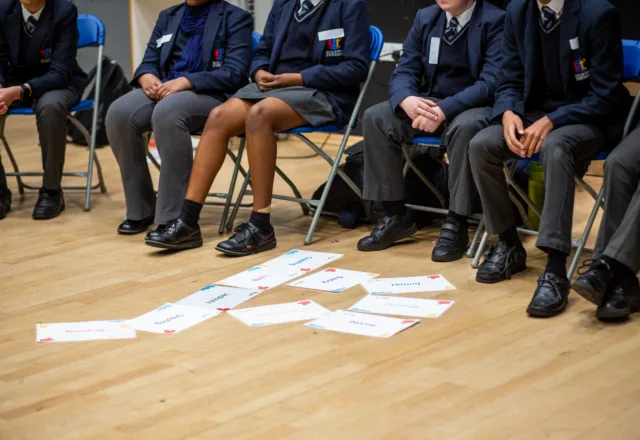
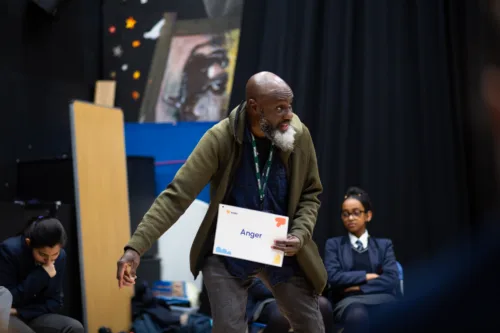
Specialist external providers are well placed to provide this support and training on this to ensure not only that teachers are confident in delivering lessons, but that lessons are engaging, for example by incorporating drama-based techniques. Feedback from both teachers and students supports the notion that drama and interactive sessions engage pupils in RSHE education. Following our projects, unprompted, 53% of secondary and 70% of primary students named games, drama and role play as what they liked about our workshops. The Government’s announcement rightly names drama as part of a more engaging offer for pupils, and our evidence shows it works for RSHE too.
If the Government wants RSHE to engage pupils as much as the rest of its new curriculum, it should:
- Fund practice-based training for teachers in every school, now. Statutory content without adequate training and support for already-stretched teachers will not work.
- Prioritise primary schools. Teachers are facing misogynistic attitudes and harmful behaviour even in primary schools. Age-appropriate support for teachers and pupils is currently lacking in the RSHE guidance and Government’s tackling misogyny plans.
- Fund specialist external providers to work alongside teachers. Evidence reviewed by the Youth Endowment Fund shows outside facilitators bring more consistent expertise, and work best when they support school staff. Access to engaging, expert RSHE should not depend on a school’s budget.
- Listen to students. Design RSHE around what students say works: active teaching methods, and difficult topics taught through a framing of relationships, friendships and fairness.
A curriculum to re-engage pupils can’t leave out relationships and RSHE. Teachers aren’t yet ready to deliver the new RSHE guidance, but with the right support they can be.
Find out more about Tender’s new report, Ready for RSHE?
More information
Trupti Reddy is available for interview.
For interview requests and further media enquiries, please contact katevine@tender.org.uk and isadora@tender.org.uk.
Visit Tender’s Media centre.