Tender staff respond to I am Helen, a devasting portrayal of domestic abuse and the destructive impact of the ‘manosphere’.
Aren’t women entitled to safety? – Sarah, Head of Curriculum and Growth
‘I wish I am Helen was required viewing for boys and men. It clearly illustrates the impact of misogyny on the lives of women, in a time where the conversation seems to be focused on male suffering. That’s not to downplay the importance of men’s mental health, or suggest that the ‘male loneliness’ epidemic isn’t an issue that needs tackling. But it does raise an important question: why are we talking more about an epidemic of male loneliness than an epidemic of violence against women and girls (VAWG)?
‘Throughout the two episodes, we see repeated examples of the sense of entitlement that underpins misogyny: the perceived right for a man to make more money than his partner, the right to be given children, the right to sex, the right to exert physical dominance, and the right to be listened to but not listen in return. When these supposed ‘rights’ are denied – as we have seen countless times in the news, in our schools, and on our streets – the response becomes aggression. Punching walls, shouting, and repeating the same points louder and louder until someone gives in are behaviours that have become the norm for men and boys influenced by misogynistic attitudes, looking to get what they feel they are entitled to. Yet aren’t women entitled to safety and freedom from fear?
‘Men and boys are valuable allies and have a crucial role to play in preventing VAWG, but the conversation around misogyny must remain centred around the true victims – women and girls. That’s why we at Tender believe in the power of preventative healthy relationships education for all young people.’
Helen contradicts many of the ‘victim’ stereotypes – Abby, Development Officer
‘I remember in one of my first training sessions as an employee at Tender, we were discussing the reasons why victims might stay in an abusive relationship. People said ‘children’, ‘finances’, ‘fear’. After a space of silence, when we felt we had exhausted the responses, the facilitator stated plainly ‘what about love?’. One of the most pernicious elements of intimate partner violence is just that: that someone you love is hurting you. Someone you’ve known for years, cared for, trusted.
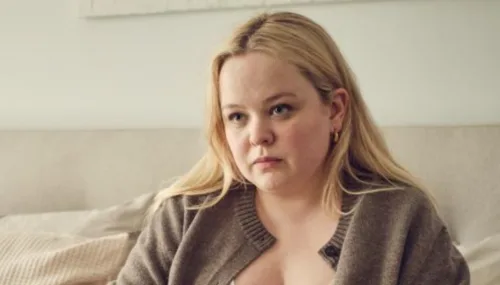
‘The power of I am Helen is in the portrayal of Helen herself. She contradicts many of the stereotypes we have often internalised when we think of a ‘victim’. She is outspoken, ambitious, strong-willed, calling out her partner at every turn. Yet Helen was terrified of repercussion from Steve, a fear that bleeds into her life. Of course she is affected.
‘Nicola Coughlan’s character implicitly highlights the importance of prevention work. Even with every single support in place and working effectively to support victims, harm has still been done. Improvements to victim services and support are a stepping stone, an incredibly important one, but a stepping stone nonetheless, to the end goal we should truly be striving for, that no one is victimised to begin with.’
It’s uncomfortable to watch, but essential – Rebecca, Development Manager
‘I am Helen sparked meaningful conversation in my living room that acts as an important reminder of the power of drama and storytelling in bringing vital societal issues to the forefront in a way that feels accessible.
‘I was so quickly at ease with Nicola Coughlan’s character. With the first giggling, playful ‘stop;’ I was fearful for how the tone might change. Their consensual sex soon becoming something very non-consensual, making clear from the first scene that this drama wasn’t going to leave anything to the viewers’ imagination. It’s uncomfortable to watch, but in the same vein, essential.
‘I was relieved that when sharing her experiences with others, she was validated and taken seriously. It took a moment to sit with the feeling of relief each time and examine where it came from. Why would anyone not believe her? Did my relief come from an inbuilt or learned belief that woman won’t be taken seriously or listened to?
‘Helen’s very real fear of Steven is palpable in moments such as when she locks the bathroom door. As women, we carry a permanent safety and defence feature which goes unnoticed but is part of our mental-load.
‘I am Helen proves how difficult it is to cut through the noise of the manosphere and peer pressure. However, it absolutely must be done and can be done. Our expert workshop leaders navigate this safely by addressing misogyny as an issue that equally affects boys and girls, inviting them to explore different perspectives, age appropriately. Through Tender’s prevention education, boys and young men are supported to be part of the solution.’
If you are a young person under 19 and are in need of support, please contact Childline on 0800 1111 or visit the Childline website – 24 hours a day, 7 days a week. If you’re an adult in need of support, please contact the National Domestic Abuse Helpline on 0808 2000 247, and/or the 24/7 Rape and Sexual Abuse Helpline on 0808 500 2222.